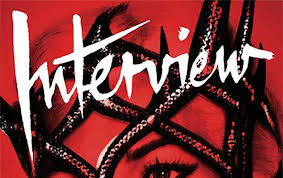
Alexi Lubomirski is a photographer you could easily mistake for a model — one cast in a fashion spread called “How to Achieve Timeless Elegance in a Blue Shirt and Jeans.” Born in England and raised in France and Botswana, he’s worldly enough to pull off undoing that third shirt button.
“My mother told me when I was about 12 that I should wear blue because I’ve got blue eyes. It stuck. Every time we watched old movies together, she would point out to me who was dressed well and who wasn’t. So all my icons are the old guys: Paul Newman. Robert Redford in Three Days of the Condor. I remember watching that and stealing his style. Basically, it’s a uniform: the blue shirt, the jeans, the Indiana Jones–style boots. When I started working for Mario [Testino], I was a student from a tiny town in England where everybody wore exactly the same thing — hooded tops and baggy trousers — but I love things that are superfitted. And like I said, I pretty much wear the same stuff all the time.”
The Weather Project at the Tate Modern About the Installation The subject of the weather has long shaped the content of everyday conversation. The eighteenth-century writer Samuel Johnson famously remarked ‘It is commonly observed, that when two Englishmen meet, their first talk is of the weather; they are in haste to tell each other, what each must already know, that it is hot or cold, bright or cloudy, windy or calm.’ In The Weather Project, the fourth in the annual Unilever Series of commissions for the Turbine Hall, Olafur Eliasson takes this ubiquitous subject as the basis for exploring ideas about experience, mediation and representation.
In this installation, The Weather Project, representations of the sun and sky dominate the expanse of the Turbine Hall. A fine mist permeates the space, as if creeping in from the environment outside. Throughout the day, the mist accumulates into faint, cloud-like formations, before dissipating across the space. A glance overhead, to see where the mist might escape, reveals that the ceiling of the Turbine Hall has disappeared, replaced by a reflection of the space below. At the far end of the hall is a giant semi-circular form made up of hundreds of mono-frequency lamps. The arc repeated in the mirror overhead produces a sphere of dazzling radiance linking the real space with the reflection. Generally used in street lighting, mono-frequency lamps emit light at such a narrow frequency that colours other than yellow and black are invisible, thus transforming the visual field around the sun into a vast duotone landscape.
A Terrifying Beauty by Richard Dorment [Telegraph.co.uk - Nov.03]
The mesmerised visitors flocking to Tate Modern's 'setting sun' installation have added a layer of meaning to the work
I promise to resist the temptation to unleash a torrent of purple prose about Olafur Eliasson's The Weather Project at Tate Modern. It is more in keeping with the spirit of the piece to describe it with clinical detachment, and to trust that my words can convey something of its beauty and power.
The fourth in the series of art works commissioned by Unilever to fill the vast space of the Turbine Hall, The Weather Project is, essentially, a vast optical illusion. As the visitor enters the building, he is confronted by what looks like a gigantic illuminated orange disc suspended from the ceiling at the far end of the hall. Discreetly placed humidifiers pump a mixture of sugar and water into the air to create a fine mist.
Seen through this soft haze, the light of the great disc is filtered and diffused so that it looks like the flaming ball of the setting sun. Then, as we start to walk down the long entrance ramp, we realise that the entire ceiling is covered in what appears to be a single huge mirror. The tiny specks of humanity we see far, far, above us are our own reflections.
That is the illusion. The reality is that Eliasson has hung a semi-circle of light from the mirrored ceiling in such a way that its reflection creates the appearance of a full circle. There is not just one mirror on the ceiling but hundreds, fractionally offset where they are joined. This makes the edges at the upper (illusory) half of the great disc appear slightly jagged or uneven, which is what makes the ball of light look so uncannily like the sun. Had the mirrors on the ceiling been level or flat, we would see a perfect circle and the whole thing would have looked unreal.
What the artist began, the audience completes. It is the visitors that make The Weather Project unforgettable. From any distance at all, people in the Turbine Hall are seen as tiny black silhouettes against a field of orange light. Minuscule in scale and robbed by the orange glow of their individuality, they are diminished by the spectacle they have come to the Tate to see.
Paradoxically, the less we look like individuals, the more aware we become that we share a common humanity, that we are all members of the same species. Against the cataclysmic beauty of the evening sun, we sense our insignificant place within the infinity of our solar system.
When I first saw The Weather Project, I thought of the sun rising through vapour in one of J M W Turner's landscapes. But, late on a Saturday or Sunday afternoon, when hundreds of people stand mesmerised in the face of the glowing disc, the work becomes truly frightening, a modern interpretation of one of John Martin's or Francis Danby's apocalyptic visions of the end of the world. A close encounter of the third kind.
Not only does the audience help to create Eliasson's work of art, but, in the weeks since the exhibition opened, the behaviour of that audience has added another layer of meaning to it.
Visitors respond not only to the circle of light, but also to the mirror above their heads. Adults and children lie on their backs staring up at the ceiling, often moving their arms and legs in a sweet, sad effort to find their own reflections in the swarming mass of undifferentiated shapes in the distance.
It is as though some deep primeval instinct compels us to do something - waving our hands, scissoring our legs, huddling in groups, forming shapes with our partners - to reassure ourselves of our individual existence in the universe.
What this great artist has done, literally, is to hold up a mirror and show us who we are.
About the Artist Olafur Eliasson (born 1967 in Copenhagen, Denmark) is a Danish-Icelandic artist. In 1995 he established Studio Olafur Eliasson in Berlin, a laboratory for spatial research. Eliasson represented Denmark at the 50th Venice Biennale in 2003 and later that year installed The Weather Project in the Turbine Hall of Tate Modern, London which reportedly attracted two million visitors, many of whom were repeat customers.
Eliasson has engaged in a number of projects in public space, including the intervention Green river, carried out in various cities between 1998 and 2001; the Serpentine Gallery Pavilion 2007, London, a temporary pavilion designed with the Norwegian architect Kjetil Thorsen; and The New York City Waterfalls, commissioned by Public Art Fund in 2008.
[tate.org.uk] Olafur Eliasson attended the Royal Academy of Arts in Copenhagen from 1989 to 1995. He has participated in numerous exhibitions worldwide and his work is represented in public and private collections including the Solomon R Guggenheim Museum, New York, The Museum of Contemporary Art, Los Angeles, the Deste Foundation, Athens and Tate. Recently he has had major solo exhibitions at Kunsthaus Bregenz, Musée d’Art Moderne de la Ville de Paris and ZKM (Center for Art and Media), Karlsruhe and represented Denmark in the 2003 Venice Biennale. He currently lives and works in Berlin.
Selected Works The basic elements of the weather – water, light, temperature, pressure – are the materials that Olafur Eliasson has used throughout his career. His installations regularly feature elements appropriated from nature – billowing steam replicating a water geyser, glistening rainbows or fog-filled rooms. By introducing ‘natural’ phenomena, such as water, mist or light, into an un specifically cultivated setting, be it a city street or an art gallery, the artist encourages the viewer to reflect upon their understanding and perception of the physical world that surrounds them. This moment of perception, when the viewer pauses to consider what they are experiencing, has been described by Eliasson as ‘seeing yourself sensing’. [tate.org.uk]
Le Blanc Purifiant This was a kind of social experiment where visitors got the opportunity to build whatever they wanted to with plain white Lego blocks. It was wonderful to see these adults hesitating when entering the space... and after a few moments stepping forward to the huge table, setting their creativity free...
With his new work, The Parliament of Reality, commissioned for the Bard College campus in upstate New York by the Center for Curatorial Studies (CCS Bard), Eliasson pushes the viewer's encounter with his art a step further by creating a space designed to inspire and physically accommodate the exchange of ideas through dialogue and negotiation. The project, to open in early July 2008, will be the artist's first permanent public outdoor installation in the United States.
"Eliasson's interdisciplinary work is perfectly suited to the life of a college campus," notes Tom Eccles, executive director of CCS Bard. "It draws the attention to our surroundings, both man-made and natural, while challenging the way we perceive and act in the world."
Notion Motion__Rotterdam Museum of Modern Art__2005
Notion Motion
[unknown]__Funf Hofe shopping mall__Munich
Serpentine Gallery Pavilion__2007__Hyde Park, London
Serpentine Gallery is one of London’s best-loved galleries for modern and contemporary art. Its Exhibition, Architecture, Education and Public Programmes attract approximately 750,000 visitors a year and admission is free.
Umschreibung__2004__Munich
(detail)
Olafur Eliasson's Take Your Time exhibit opened at the P.S. 1 Contemporary Art Center this weekend. Done in conjunction with MoMA, this major survey of Eliasson's work contains installations that can be seen for the very first time. A little cubby-hole in the wall that has mirrors all around. Looks like you're in the middle of a huge tower that goes on forever in all directions.Take Your Time set
[unknown]__San Francisco MoMA__in the lobby, looking up
(detail)
[unknown]
360° Room for All Colours__2002
Take Your Time (review) Holland Cotter writes: "What a relief. Near the end of a decade crammed with junk-art collectibles and a museum season of ragbag sculptures and wallpapered words, we get bare walls and open space in the Olafur Eliasson survey at the Museum of Modern Art and P.S. 1. Light and color, with a few odd-duck objects of a kind you might wrap up and take home."
Beauty
"Like abstract painting, Mr. Eliasson's art can be slow to reveal itself. In an installation called 'Beauty,' a rainbow emerges from a curtain of mist and vanishes. Maybe you see it; maybe you don't. The illumination in an empty 'white' room at P.S. 1 changes color all but imperceptibly as you watch: from white, to faint gray, to pale pollen-beige, to lavender, one dissolving into the next like shifts in weather or the readings of a mood ring."
Take Your Time
" 'Take Your Time' a new piece at P.S. 1, made for the show, consists of a huge, tilted, disc-shaped mirror suspended horizontally from a gallery ceiling. What strikes you at first is the omniscient, bird's-eye reflection of the room below, with you standing in the middle of it. Then you notice that the mirror is rotating very slowly, and with a subtly undulating motion that causes the room itself to feel warped and unstable. You experience this as much with your sense of balance as with your eyes."
360° Room for All Colours
"Mr. Eliasson's art deals, some would say, in a politics of enchantment. Enchanting the work certainly is, and open, evanescent, intellectually stimulating, and beautiful. In all these ways it offers a model for a future beyond the present rummage-sale glut. In others ways, though, it reminds us how far art has not come."
From a Master of Weather, 4 Waterfalls for New York His much-publicized $15 million initiative is to create four waterfalls ranging from 90 to 120 feet in height that will appear from June 26 to Oct. 13 and run from 7 a.m. to 10 p.m. In addition to the waterfall at Pier 35, just north of the Manhattan Bridge, there will be one in Brooklyn at the foot of the Brooklyn Bridge, another between Piers 4 and 5 near the Brooklyn Heights Promenade and a fourth on the north shore of Governors Island.
Organized by the nonprofit Public Art Fund and the city of New York, it is being billed as the city’s biggest public art project since “The Gates,” the $20 million effort by the artists Christo and Jeanne-Claude in which 7,500 gates festooned with saffron-colored fabric panels were positioned along Central Park’s pathways for 16 days in 2005.
It is also Mr. Eliasson’s first public art project in New York. When he proposed the idea to the Public Art Fund, Susan K. Freedman, the organization’s president, decided that such an undertaking could be accomplished only with the city’s heft behind it. “It was too ambitious,” she said. “This has been two intense years of getting permits and making sure it was environmentally safe.”
Altogether, at least 108 people have been involved, including engineers, scientists, divers, scientists, riggers and environmentalists. [...]
City officials and the Public Art Fund say that no city money is being used to pay for the waterfalls, with all of the funds coming from foundations, corporations and private supporters. [...]
Given that much of New York City is surrounded by water, the idea of creating waterfalls seemed obvious to Mr. Eliasson, who suggests that New Yorkers are not as strongly connected to their waterfronts as urban Europeans are.
Throughout history, he said, New Yorkers “have always taken water for granted.” He added: “Now people can engage in something as epic as a waterfall, see the wind and feel its gravity. You realize that the East River is not just static.” [...]
'Waterfalls' Display Opens on Harbor “New York City Waterfalls,” Olafur Eliasson’s $15.5 million quartet of temporary cascades dotting the New York Harbor, formally opened on Thursday morning with a ceremony at South Street Seaport and a publicity blitz by Mayor Michael R. Bloomberg, who criss-crossed four morning television programs to tout the installation.
Officials billed “Waterfalls” as the city’s grandest public art commission since Christo and Jeanne-Claude flooded Central Park with saffron-colored fabric panels for “The Gates” in 2005.
Flanked by Mr. Eliasson, the mayor said at the opening ceremony — which began around 10:30 a.m., a half hour late — that the “Waterfalls” were a “symbol of the energy and vitality that we have been bringing back to our waterfront in all five boroughs.” [...]
The four waterfalls, 90 to 120 feet tall, churn 35,000 gallons of East River water per minute, or 2.1 million gallons per hour. The water first goes through mesh-covered “filter intake pools” to ensure that fish and larvae are not pulled into the pumps or harmed.
Mr. Bloomberg called the project “a triumph of human imagination and mechanical engineering,” and a reminder that “New York City is a place where big ideas can be realized.” Such projects, he said, apologizing in advance for a bad pun, “whet the artistic appetite.” [...]
Mr. Eliasson added, “It’s about the public space and it’s not about me. I’m happy to be here today and this is the moment where I say it’s not my work of art anymore, it’s your work of art. … This piece of art is now a part of the city. It belongs to the people of the city.”
He said the scale and location of the project were important factors for him.
“I didn’t really want to do something very big,” he said. “I just wanted to do something that I felt was appropriate to the scale of the city.” He said he hoped that for viewers approaching the project, “you’re suddenly in the space, you’re not looking at it from the outside.” He added that a “great city” “should be inclusive rather than exclusive.” [...]
Mr. Eliasson added,
You could say that commercial space or commodified spaces are more about consuming or a systematized way of getting involved in a space. This is different. This is not about consuming space. This is about using a space to evaluate your relationship with it. That’s a whole different kind of dynamic space and I see, in terms of our city and the waterfall, a great potential.
He added, “Water has this fantastic ability to be everything for everybody.” [...]
Double Eye The Double Eye was a graphics project for Berlin based artist Olafur Eliasson on behalf of his Berlin-based gallery, Neugeriemschneider. It features on the cover of his new interview book, released in October 2004. It's his eye(s).
Olafur Eliasson set Olafur Eliasson on Flickr It makes a certain sense that Olafur's work turns up as frequently as it does (on flickr). First, it's pretty sexy, and it looks hard to take a bad picture of it. Second, the elements of spectacle he explores make people want to take pictures of it. But most importantly, I think, is the self-conscious experiential nature of the work itself: it is art about the experience of perceiving and seeing, not just art, but everything. And that's the sweet confluence with flickr, a site where people who pay attention to seeing - and photographing - the world as they experience it meet and mingle. [...] _______________________________________
The Mediated Notion__2001
But is it Installation Art? What does the term “installation art” mean? Does it apply to big dark rooms that you stumble into to watch videos? Or empty rooms in which the lights go on and off? Or chaotic spaces brimming with photocopied newspapers, books, pictures and slogans? The Serpentine Gallery announced its summer exhibition of work by Gabriel Orozco with the claim that he is “the leading conceptual and installation artist of his generation” – yet the show comprised paintings, sculptures and photography. Almost any arrangement of objects in a given space can now be referred to as installation art, from a conventional display of paintings to a few well-placed sculptures in a garden. It has become the catch-all description that draws attention to its staging, and as a result it’s almost totally meaningless. [...] _______________________________________
...by diddo Wetsuits are both functional and protective, but why must they all look the same? Is there some unwritten law that dictates we shed our individuality to blend into the monotone waters? Not to challenge Mother Nature’s art direction but it’s high time for a change. With that in mind, I took up the challenge to create an alternative. With custom inks and unique printing techniques, I was able to map textures onto the suits to create original designs that evoke the mysteries of the seas.
The first edition contains four original designs: a rusted iron diving suit evoking the days of Jules Verne, the anatomic musculature suit as a homage to our inner strength, a wet suit which gives the illusion that the wearer has been attacked by a group of hungry sharks and finally a whale shark patterned suit that celebrates the brilliance and originality of our natural water world.
You don’t need to sacrifice fashion for safety. Fortunately for you artist Diddo Velema has catered to your psychotic needs with these designer gas masks unveiled in Bucharest at Luxury Show 2008. [cubeme.com]
We are in a state of perpetual war – with ourselves and with the eco-system that sustains us. Perpetual war breeds perpetual fear. In the present context, this fear stems from our extreme desire for authenticity and manifests itself in our collectively insatiable culture of consumption.
Deep down, we are afraid we may never be satisfied. An expanding archive of branded myths and icons feeds this fear. Designer Gas Masks is an attempt to visualize this state of mind. Because it is only by first acknowledging and then challenging fear that we will all be able to breathe a little easier. [bydiddo.com]
About Diddo has worked for over 12 years as a designer and art director for a diverse range of design and advertising clients. From creative hot shop LABORATORIVM to the independent advertising agency, Modernista!. He has taught at the School of Arts in Utrecht, The Netherlands and contributed to various international projects such as Frank Gehry’s Sentosa and UNESCO’s ICAT project in Costa Rica.
Often called a next generation creative, having skills in concept creation, art direction, visualization, photography and design, he feels it’s not about isolating people’s skills. It’s about making the best use of your combined skills and experiences. He doesn’t believe in traditional approaches and tries to blur boundaries between art, design, architecture, fashion, photography, product design, etc. as often as he can. It’s really about being open and dynamic, exploring, seeing and taking advantage of new opportunities.
Currently, by setting up his own studio, ‘… by diddo’ in Amsterdam, he’s creating a platform for developing branding and art ideas for both freelance and personal projects. It’s something he’s wanted to do for many years, and in doing so, he hopes to create opportunities for collaborating with a diverse group of inspiring people all over the world. [bydiddo.com]
Marco Brambilla Civilization depicts a journey from hell to heaven interpreted through modern film language using computer-enhanced found footage. This epic video mural contains over 300 individual channels of looped video blended into a multi-layered seamless tableau of interconnecting images that illustrate a contemporary, satirical take on the concepts of Heaven and Hell.
Crush Civilization is a video installation we created with artist/director Marco Brambilla for the elevators Standard Hotel in NYC. It's comprised of over 400 video clips and it takes elevator passengers on a trip from hell to heaven as they go up or from heaven to hell as they go down.
It is an art piece first and foremost. The artist, Marco Brambilla is immensely talented, with a monumental vision. As much as we brought to the piece it really is Marco's vision. It really is a moving painting rather than a standard video piece. It doesn't pause but it does reverse. The cost? Well, I think it is actually for sale through Marco's gallery in Los Angeles. What it cost to make? It was a labour of love for all involved. it took roughly six months to complete, and had a team at Crush of roughly eight people.
We love working with Marco as he is very creative and he likes to work very fast. When new ideas are unearthed during the creative process, you have to be ready to go with him and explore those ideas or you simply don’t keep up with him. When he asked us to work with him on Civilization, a vision he had of taking hundreds of stock footage, movie footage and original clips and combining them to create a moving landscape depicting the ascension from hell to heaven, we knew that it was going to be huge challenge but one we were very excited about.
Marco is very gutsy and bold but also has great respect for collaboration and discovery of ideas that blossom during the process. The project had two huge challenges. Firstly we needed to figure out how to create content that could move with the elevator where it would ultimately be viewed. The idea was this, when you go up in the elevator the content goes down and when you go down it goes up. Not unlike a ride film this project was designed to be synced to the moving environment of the hotel elevators in New York. We wanted to synchronize the footage to the movement of the elevator as best as we could.
The second challenge was creative. What are we seeing through this ‘elevator window’? We only really knew at the beginning that the canvas or environment would be very tall and skinny due to the physics of elevator travel and we wanted to go from a hellish landscape to a heavenly one.
We began with exploring the idea of using a game engine to house the project. Seemed easy, map footage onto planes in space, attach a PC to the elevator and we can move up and down in the game environment all day. Unfortunately, once we started to collage the clips together in the Flame we knew the game engine idea wouldn’t fly. We approximated that we would have 250 looped HD clips in the environment and our Flame could barely handle it (in the end it was closer to 500 looping clips). We compromised by locking ourselves into the idea that we would create a huge vertical canvas that we would scan up and down on once the elevator was in motion. The final piece was approximately 1920 x 7500 pixels.
Another technical wrinkle was more human. Would we create motion sickness by subjecting riders on the elevator to the video art? To test this we shot some footage of a rising and falling landscape on a glass enclosed elevator and played back the footage on a 42″ plasma in a fully enclosed elevator. Not one person in the 30 we used in the test got sick so we knew our gut check was all right.
In parallel to the technical research, Marco and his studio staff began the process of researching and collecting a vast amount of footage sampled from both mainstream and more obscure film sources. Marco then assembled still grabs from each piece of sampled footage into photomontages, which we would review weekly while Marco’s editor cut together a linear chronology of what the components in journey from hell to heaven may look like.
The logistical task of collecting and cataloguing all the clips involved a great deal of coordination between our producer and Marco’s studio and stretched over a period of almost three months. Once the material was imported into Flame we would invariably make adjustments and receive more photo-collages that would polish to make the “video mural” look as seamless as possible. The clips were used in much the same way the way a painter would use a colour or texture. We felt it was like audio sampling, using the clips as beats and timing them all to work together to create something new and original. Marco and our team experimented in the Flame and played with the clips for about six weeks, arranging and rearranging them on the 2d canvas over and over to find the right compositions. Most of this work was done at night because we couldn’t afford to do it during prime time hours.
Not only were we playing with where on this huge canvas the clips should go, we had to consider the looping aspect of this project. We wanted the canvas to loop once it got to the top of heaven and come right back around to hell again. Once the canvas looped, each of the 500 clips had to be looped individually as well. Along with colour correction, each clip required careful vari-speeding and stabilization to allow all the pieces fit together. We ping-ponged most of the clips as to avoid any cutting on the loop points. With all the clips treated and placed into the canvas we color corrected the entire thing as one big piece of wallpaper. We had over a hundred ‘power windows’ on the piece to isolate sections and make each station gel together. We ended up with six main stations on the canvas. Hell, lower purgatory, middle purgatory, upper purgatory, heaven and upper heave/lower hell which was the loop point.
After all this was done we set out to redo the entire piece in 3d space! We took each station, rendered it out as a static 2.5 minute plates and then projected those onto geometry modeled to match the stations layout. We then had to go in and render the stations with and without most of their elements so we could achieve the proper parallax. Essentially it was like recreating the entire project over again but with most of the guesswork taken away with the 2d final as our road map.
Once the 3d version was done, we slept.
Q&A with Marco Brambilla Tell me how you got involved with The Standard and this project. I work as a video artist—the owner of the Standard was familiar with my work from a show in New York. He commissioned a video piece to be featured as a permanent installation at the new Standard hotel in New York.
Was there any type of creative brief given to you? They were interested in a work which could be installed in the elevators. Other than that there was no brief—the understanding was that I would propose a work and they would either approve it or I would come up with another approach.
How did you come up with the concept for this art installation? The idea of doing a “video mural” had interested me for quite some time and the journey from hell to heaven depicted in this way seemed to be a good fit.
How did you approach this project? The first phase was the longest and most involved because it was all about researching and then sampling the film clips. I then put together both a chronological video sequence of the “journey” from hell to heaven and “Photoshopped” collages using still images to create the composition. These elements were then brought to the people at Crush to translate this into motion using the video clips as loops. There was a great deal of trial and error involved at this stage and I was constantly making adjustments as we proceeded through the final composition to ensure the moving composite would be as seamless as possible.
Were there any challenges? I don’t think anything like this had been done before so the technique was being refined as the content was being assembled. This could not have been done without an intimate collaborate with Crush at every stage since; there were so many variables to deal with simultaneously.
Tell me how it will be used in The Standard, NY It will playback on a high-definition monitor which will be seen through a viewing port in each of the elevators at the hotel and move according to the direction of the elevator.
Marco Brambilla (born 1964, Milan, Italy) is an Italian-born Canadian artist and filmmaker who works in the United States. Educated at Ryerson University, Toronto, Canada, where he studied film, he first worked in commercials and feature films, directing the successful 1993 science fiction film Demolition Man. In 1998 he shifted focus to video and photography projects, and has since exhibited works in private and public collections, including at the Guggenheim Museum in New York, "Cyclorama" at the San Francisco Museum of Modern Art, and "HalfLife" at the New Museum of Contemporary Art. His commissions include "Superstar" for the "59th Minute" series in Times Square in 1999, and "Arcadia" for "Massless Medium: Explorations in Sensory Immersion" at Brooklyn Bridge Anchorage in 2001, both for New York public arts organization Creative Time. His installation, "Cathedral" was showcased during the Toronto International Film Festival 2008 and his latest work Civilization will be a permanent installation at the Standard Hotel in New York when it opens in 2009. Transit, a collection of photographs Brambilla took in and around national and international airports, was published by Booth-Clibborn Editions in 2000. Brambilla currently lives and works between New York and Los Angeles.
Marco Brambilla's video installations have garnered international acclaim from publications such as Artforum, frieze, Art in America, Arena, Empire, GQ and Premiere magazine. The New Yorker praised his work as: “absorbing and delicate enough to restore one’s faith in the medium.” [marcobrambilla.com]
 Swimsuit: David David
 Trunks: Orlebar Brown
 Shorts: Orlebar Brown
 Swimsuit by Agnes Valentine
 Swimsuit: Topshop


 Alexi Lubomirski is a photographer you could easily mistake for a model — one cast in a fashion spread called “How to Achieve Timeless Elegance in a Blue Shirt and Jeans.” Born in England and raised in France and Botswana, he’s worldly enough to pull off undoing that third shirt button.
 Flair__Feb.06
 Scarlett Johansson__Harper's Bazaar__Feb.09
 German Vogue__Mar.09


 About the Artist
 With his new work, The Parliament of Reality, commissioned for the Bard College campus in upstate New York by the Center for Curatorial Studies (CCS Bard), Eliasson pushes the viewer's encounter with his art a step further by creating a space designed to inspire and physically accommodate the exchange of ideas through dialogue and negotiation. The project, to open in early July 2008, will be the artist's first permanent public outdoor installation in the United States.
 Notion Motion__Rotterdam Museum of Modern Art__2005
 Notion Motion
 [unknown]__Funf Hofe shopping mall__Munich
 Serpentine Gallery Pavilion__2007__Hyde Park, London
 Past Pavilions
 Serpentine Gallery is one of London’s best-loved galleries for modern and contemporary art. Its Exhibition, Architecture, Education and Public Programmes attract approximately 750,000 visitors a year and admission is free.
 Umschreibung__2004__Munich
 (detail)
 A little cubby-hole in the wall that has mirrors all around. Looks like you're in the middle of a huge tower that goes on forever in all directions. Take Your Time set
 [unknown]__San Francisco MoMA__in the lobby, looking up
 (detail)
 [unknown]
 360° Room for All Colours__2002
 Beauty
 Take Your Time
 360° Room for All Colours
 From a Master of Weather, 4 Waterfalls for New York
 'Waterfalls' Display Opens on Harbor
 Rocketboom report (vid)
 Still from Round Rainbow (vid)
 The Mediated Notion__2001
 Wounded Star__Rebecca Horn__Barcelona
 Embankment__Rachel Whitehead__Tate Modern
 Shibboleth__Doris Salcedo__Tate Modern
 [unknown]__ Dani Karavan__Museum Ludwig, Cologne
 Deer Shelter Skyspace__James Turrell__Yorkshire Sculpture Park
 Deer Shelter Skyspace
 [unknown]__Henry Moore__Kew Gardens
 [unknown]__Henry Moore__Kew Gardens
 Dutch artist & designer

 ...by diddo

 You don’t need to sacrifice fashion for safety. Fortunately for you artist Diddo Velema has catered to your psychotic needs with these designer gas masks unveiled in Bucharest at Luxury Show 2008. [cubeme.com]
 The Standard elevator